Studying poker works when it changes what you do at the table, and understanding a spot isn't enough for that. The methods with the most evidence are simple: answer before you look at the solution, come back to the same spots over several weeks, mix spots that look alike, and practice in a format close to the real game. The feeling of a productive session is a poor guide, and because a hand's result says little about the decision, what you review is the decision.
You spent the week on 3-bet pots: solver outputs, two videos, a few hours with the sims open. By Friday the lines made sense.
Saturday, hour six, a few minutes after a cooler. The same spot comes up and you play it the way you always did. You only notice it in the review on Sunday.
You knew the line on Friday. On Saturday, it wasn't there when you needed it.
(This is a composite example, not one specific player.)
What does it mean to study poker?
Studying poker is practice designed to change the decisions you make at the table. Watching, reading and running sims are part of it, but they only count as study when something in your game ends up different.
Most study tools can be used in two ways. In active study, you give an answer first (an action, a size, a reason) and then check it. In passive study, you take in information someone else produced. The same solver, video or hand review can be either one. What decides it is whether you commit to an answer before you see the solution.
What is each type of study for?
Each kind of study does a different job. A lot of wasted hours come from asking one to do the job of another, like expecting videos to fix a leak that needs drills.
Hand and session review. This is your feedback. It tells you whether you played a hand well or badly, separate from how it ended. Done regularly, it moves your attention from results to process, and it builds confidence that rests on your decisions instead of your last session. Mark hands while you play when you're unsure, not only when you lose.
Solver work. The solver gives you the deepest view of why a strategy works, and it's an effective tool. What makes it pay off is the structure around it: a clear question, one variable at a time, and an answer written down before you look. Without that structure, it's easy to spend hours looking at frequencies and keep very little.
Deep study of a topic. This is where you build understanding of one area, like a type of board, a stack depth or a format. You work out the reasons and the patterns, and you turn them into a few simple rules you can take to the table.
Drills. Drills are practice: you make the decision, get feedback and repeat. They're also a test. Run them with a time limit or with some pressure, and you find out how much of what you studied is really consolidated.
Videos and courses. They bring new ideas and new ways of thinking, often from players above your level. They're also the easiest kind of study to turn passive. An hour of content feels like work and can leave little behind. Videos work much better when something comes after them: a drill on the spots you saw, or a concrete goal to apply in your next session.
Database analysis. This is how you find your leaks with a real sample and see how the player pool plays. Watch out for small samples, and check which tools are allowed where you play: GGPoker, for example, banned many of these programs from running alongside its client starting in December 2026.
ICM and final table study. For tournament players: how prize pressure changes your ranges, and how to prepare final tables and deals. It's easy to spend hours on precision that changes little in practice.
Study with others. A coach, a study group or a few colleagues you trust. I think a study group is one of the most valuable parts of a player's routine, and if you don't have one, it's worth building. You learn from how others think, you get feedback that isn't your own, it builds confidence and it's satisfying. The risk is that what the group studies often isn't what you need to work on. Use the group on top of your own priorities, not in place of them.
Why doesn't what I study show up at the table?
Many players describe the same problem: they know the theory, but under pressure it doesn't come out. One player put it simply on a poker forum: "Knowing theory and applying it under pressure are two different skills." Research on memory and pressure helps explain why.
Knowing a spot and having it ready are two different things
Memory research separates two kinds of knowledge. One is knowing that: facts and ideas you can explain. The other is knowing how: skills you perform. They rely on systems in the brain that work together and sometimes compete.
Some of the clearest evidence comes from patients with memory damage. In one classic study, patients who couldn't form new memories still learned a new task at a normal pace without remembering the practice, while patients with damage in another part of the brain showed the opposite pattern. The task looks a lot like poker: learning which cues predict an outcome when the right answer sometimes loses. The groups were small, but the basic distinction has held up in later work.
With practice, knowledge changes form. At first you reason through a spot step by step: the ranges, the board, the frequencies. That's slow and uses a lot of attention. With enough repetition, you start to recognize the situation and the answer comes almost on its own. Brain imaging studies show this as less activity in the networks we use to concentrate, as a task becomes practiced.
Understanding a spot gets it into the first form. Having it ready at the table takes the second, and that comes from bringing it back from memory many times, in the format you'll need it.
What pressure does to a decision you still have to think through
Pressure and stress hit working memory first: the space you use to hold several things in mind and reason through them. In a set of math experiments, pressure hurt performance mainly on the problems that needed the most working memory, and mainly in the people who usually relied on it most. A review of 32 data sets found that stress made decisions under uncertainty somewhat riskier and less advantageous. The effect was small on average and varied a lot from person to person.
So what you still have to work out in the moment is the most fragile part of your game, and what you've practiced until you recognize it holds up better. That works in both directions: a leak you've repeated a thousand times holds up under pressure too.
If frustration is part of what happens to your decisions late in a session, Poker tilt: what the research says and what actually helps covers that side.
Why poker results are a bad teacher
To learn from experience, you need stable patterns and feedback that tells you clearly when you were right. Chess is close to that. Poker isn't. A review of poker as a field of expertise describes it as a 'medium-validity' environment, where results can reward bad decisions and punish good ones for a long time.
People also judge a decision as better when it ends well, even when they know the result shouldn't matter. And feeling sure about a read doesn't mean it's right: researchers who study expert intuition agree that confidence isn't a reliable sign of accuracy.
There's research from poker itself too. In an experiment with 459 online players, anger lowered the accuracy of their decisions, but only when a social cue (a pair of watching eyes on screen) was present, and experienced players were more accurate overall. What you know when you're calm can lose some precision in certain emotional states. A run of bad results can also push you to change a strategy that was working, which Poker downswings: the three types and how to tell which one you're in goes into.
Why does watching solver outputs feel like progress?
Looking at a solution and understanding it feels like learning, often more than it is.
In a well-known experiment, students who reread a text felt more confident than students who tested themselves, but remembered less a week later. In a university physics course, students learned more in active classes and felt they had learned less. People tend to read ease as learning, and effort as a sign that something isn't working.
In poker, the most comfortable kinds of study are the passive ones: scrolling through sims, watching a video, rereading notes. The kinds that work better usually feel worse while you do them, and that doesn't mean they're failing.
The solver isn't the problem here. The same solver session becomes active the moment you answer before you look.
Which study methods have the most evidence?
There are no controlled studies comparing study methods in poker players, so what follows is research from other fields (classrooms, medicine, math, physics, sport) applied to poker. Most of it comes from learning facts and concepts, and the effects are smaller for complex skills, though the main principles have held up in areas like medical diagnosis and problem solving.
Answer before you look
The research term is 'retrieval practice': bringing information back from memory instead of reading it again. In a review of 222 classroom studies with more than 48,000 students, quizzing improved learning by a medium amount. Trying to answer and getting it wrong, then seeing the answer, also helps more than seeing the answer straight away.
It works best with feedback, and when the level is within reach. With no feedback and most answers wrong, the benefit can disappear. In poker, this means that before you open the solution, you decide the action, the size and a one-line reason, and then you compare. Drills with feedback do this by design.
Come back to the same spots over several weeks
The research term is 'spacing': spreading the same study time over separate sessions. In a study of more than 1,350 people, the best gap between sessions grew with how long they needed to remember the material, and reviewing a bit late cost less than reviewing too early. The benefit is smaller for complex tasks, but it's still there. And the gaps don't need to keep getting longer: evenly spaced reviews work about as well.
In practice, a topic you study comes back a few days later, again the next week and again a few weeks after that, always by answering from memory. A short recall before you play, on topics you've already studied, is a simple way to do this every day.
Mix the spots you confuse
The research term is 'interleaving': mixing different types of problems in the same session. In a review of 59 studies, it helped most when the things to learn looked similar to each other, and the benefit reversed with simple word lists.
When you practice ten spots of the same type in a row, you know what kind of spot it is before you look. At the table, recognizing which spot you're in is often the hardest part.
Many study plans recommend one topic per week. That works well while you're learning a new concept. Once you understand it, mix it with the spots it gets confused with: the same board texture in single-raised and 3-bet pots, or the same action from different positions.
Get feedback on the decision, not the outcome
In a large review of feedback research, feedback improved performance on average, but in more than a third of cases it made performance worse. It tended to hurt when it moved attention from the task to the person.
The result of a hand is noisy feedback. The useful kind is about the decision: the solver, a review with your coach or group, a check of your ranges. The way you talk to yourself in review counts too. "I always mess this up" is about you. "I call too often here against small bets" is about the decision, and you can work on it.
Practice in a format close to the table
Learning carries over best to situations that look like the ones you practiced. A review of 14 studies in sport and policing found that training under pressure improved performance under pressure: few studies, but consistent results. For a player, that means deciding the spot as it appears on your screen, with a time limit, instead of looking at a chart. Drills with a timer, or explaining your line out loud to your study group, add some of the pressure of the table.
Does the way you study change as you get better?
It does, and it should. What helps a player who is learning a format is often unnecessary for someone who has played at a high level for years.
A review of 60 studies found that detailed guidance, like worked examples and step-by-step explanations, helped learners with little prior knowledge, while learners with a lot of prior knowledge did better with less guidance. Comparing similar cases with different solutions also tends to work well, especially when you look for the principle after the comparison.
In poker, guided content, worked hands and structured courses earn their place when you start a format or a new concept. A player at the top of a field has usually changed how they study over the years. They need fewer explanations and harder comparisons: two spots that look the same but have different solutions, the nodes where their intuition and the solver disagree, the tendencies of their own pool. Copying the routine of a much stronger or much weaker player often means studying the wrong things.
How much should I study versus play?
There's no ratio with evidence behind it. Coaches recommend everything from mostly study to about ten times more play than study, and none of these numbers comes from data. Practice does matter: in a review of 88 studies, deliberate practice explained about a quarter of the differences in performance in games, and less in environments that are hard to predict. Important, but not everything.
A more useful question is how much of your study reaches the table. What I usually recommend to players:
- Keep a real study block outside of series, and a short maintenance routine during series when the schedule allows it.
- Keep your study priorities few and clear, one or two at a time. Group sessions, new videos and whatever is popular this month shouldn't pull you away from them.
- Before you play, do a short recall on topics you've already studied.
A study structure that carries over to the table
This is organized by moment, and each moment fits one of three documents: your Plan, your Performance Agreement and your Playbook.
Before the session: your Playbook
- Do a short recall. Spend 10 to 30 minutes on topics you've already studied and know reasonably well. Mix spots from different weeks, answer from memory and check yourself. It's your daily spacing, right before you need those spots.
- Pick one spot for today. One spot or one concept you want to notice in this session, not five.
- Take two or three simple rules to the table. Rules you already decided while studying, like a threshold or a default line for a type of board. Under pressure, they hold up better than a calculation in the moment. Keep them in your Playbook.
- Write an if-then plan. "If this spot comes up, I'll play it this way." Research on this kind of plan finds it helps people turn what they intend into what they do. It works for your session rules too: "If I lose a big pot, I take two minutes before the next decision."
During the session
- Mark hands by doubt, not by result. Mark the spots where you were unsure, uncomfortable or saw something unusual. The hands you lost will show up in your review anyway.
- Notice the spot you picked. When it comes up, notice it, even if you don't play it perfectly. Recognizing it is part of the training.
After the session: the review
- Answer before you look. For each marked hand, write what you would do and why, then check the solution or your notes.
- Separate technical errors from state errors. Some mistakes come from what you know. Others come from your state: tired, frustrated, distracted. Technical errors go on your study list. State errors go in your Playbook, because studying the spot again won't fix them.
Across the week: your Plan and Performance Agreement
- Set your priorities in your Plan. One or two areas at a time, with the spots that belong to each.
- Learn in blocks, then mix. A new topic starts on its own. Once you understand it, it goes into mixed drills with the spots it gets confused with.
- Bring topics back. A few days later, the next week and a few weeks after that, always by answering from memory.
- Protect your rest. Sleep loss before studying makes it harder to learn new material. After a long late session, use the next day to review instead of starting a new topic.
- Measure yourself on what you control. In your Performance Agreement, judge the week by whether you did the recall, reviewed with an answer first and kept your priorities, not by your results.
If you want to build this around your own schedule and your own game, this is the kind of work I do in 1:1 sessions.
- My study priorities right now: one or two areas.
- This week's topic, and the spots it gets confused with.
- Before each session: what I recall, for how long, the spot I picked and my if-then plan.
- During: what I mark.
- After: what did I answer, what did the solution say, and was it a technical error or a state error?
- When this topic comes back: in a few days, next week, in a few weeks.
- Group or coach: what I'm bringing this week.
- What I'll measure myself on this week: three things I control.
When studying is more than a performance issue
Studying a lot isn't a problem. Some signs go beyond performance, though:
- You can't stop thinking about poker or studying, even when you want to rest.
- You feel exhausted and distant from the game for a long time, even after breaks.
- Low mood or loss of interest most days for two weeks or more, or sleep problems that don't improve.
If any of this sounds familiar, talk to a doctor or a licensed mental health professional where you live. Find A Helpline lists free, confidential services in many countries. My work is performance coaching, not clinical treatment. When something needs clinical care, I refer players to people who do that work.
Your next step
If you want to build a study structure that fits your game and your schedule, book a free 30-minute diagnostic call. We'll look at how you study now and see if it makes sense to work together. If you'd rather start on your own, join the newsletter.
FAQ
Usually because understanding a spot and having it ready under pressure are two different things. Having it ready comes from bringing it back from memory many times, in a format close to the table. Pressure also hits first the decisions you still have to work out in the moment.
There's no ratio backed by evidence. What matters more is how much of your study reaches the table: a steady study block outside of series, short maintenance during series and a few clear priorities.
Often because the study is passive. The solver is an effective tool, but it pays off inside a structure: a clear question, one variable at a time, and your answer written down before you look. Mixing spots and coming back to them over several weeks helps what you learn stay.
No, but it's the easiest kind of study to turn passive. Videos bring new ideas. They work much better when something comes after them: drills on the spots you saw, or a concrete goal to apply in your next session.
For some things. It can help you organize notes and summarize sessions, but general AI tools aren't reliable for analyzing hands: they can get ranges and math wrong while sounding confident. Real-time assistance while you play is cheating and is banned on poker sites.
- Alfieri, L., Nokes-Malach, T. J., & Schunn, C. D. (2013). Learning through case comparisons: A meta-analytic review. Educational Psychologist, 48(2), 87–113. https://doi.org/10.1080/00461520.2013.775712
- Baron, J., & Hershey, J. C. (1988). Outcome bias in decision evaluation. Journal of Personality and Social Psychology, 54(4), 569–579. https://doi.org/10.1037/0022-3514.54.4.569
- Beilock, S. L., & Carr, T. H. (2005). When high-powered people fail: Working memory and "choking under pressure" in math. Psychological Science, 16(2), 101–105. https://doi.org/10.1111/j.0956-7976.2005.00789.x
- Brunmair, M., & Richter, T. (2019). Similarity matters: A meta-analysis of interleaved learning and its moderators. Psychological Bulletin, 145(11), 1029–1052. https://doi.org/10.1037/bul0000209
- Cepeda, N. J., Vul, E., Rohrer, D., Wixted, J. T., & Pashler, H. (2008). Spacing effects in learning: A temporal ridgeline of optimal retention. Psychological Science, 19(11), 1095–1102. https://doi.org/10.1111/j.1467-9280.2008.02209.x
- Chein, J. M., & Schneider, W. (2005). Neuroimaging studies of practice-related change: fMRI and meta-analytic evidence of a domain-general control network for learning. Cognitive Brain Research, 25(3), 607–623. https://doi.org/10.1016/j.cogbrainres.2005.08.013
- Cohen, N. J., & Squire, L. R. (1980). Preserved learning and retention of pattern-analyzing skill in amnesia: Dissociation of knowing how and knowing that. Science, 210(4466), 207–210. https://doi.org/10.1126/science.7414331
- Deslauriers, L., McCarty, L. S., Miller, K., Callaghan, K., & Kestin, G. (2019). Measuring actual learning versus feeling of learning in response to being actively engaged in the classroom. PNAS, 116(39), 19251–19257. https://doi.org/10.1073/pnas.1821936116
- Donovan, J. J., & Radosevich, D. J. (1999). A meta-analytic review of the distribution of practice effect: Now you see it, now you don't. Journal of Applied Psychology, 84(5), 795–805. https://doi.org/10.1037/0021-9010.84.5.795
- Gollwitzer, P. M., & Sheeran, P. (2006). Implementation intentions and goal achievement: A meta-analysis of effects and processes. Advances in Experimental Social Psychology, 38, 69–119. https://doi.org/10.1016/S0065-2601(06)38002-1
- Kahneman, D., & Klein, G. (2009). Conditions for intuitive expertise: A failure to disagree. American Psychologist, 64(6), 515–526. https://doi.org/10.1037/a0016755
- Kluger, A. N., & DeNisi, A. (1996). The effects of feedback interventions on performance: A historical review, a meta-analysis, and a preliminary feedback intervention theory. Psychological Bulletin, 119(2), 254–284. https://doi.org/10.1037/0033-2909.119.2.254
- Knowlton, B. J., Mangels, J. A., & Squire, L. R. (1996). A neostriatal habit learning system in humans. Science, 273(5280), 1399–1402. https://doi.org/10.1126/science.273.5280.1399
- Kornell, N., Hays, M. J., & Bjork, R. A. (2009). Unsuccessful retrieval attempts enhance subsequent learning. Journal of Experimental Psychology: Learning, Memory, and Cognition, 35(4), 989–998. https://doi.org/10.1037/a0015729
- Laakasuo, M., Palomäki, J., & Salmela, M. (2015). Emotional and social factors influence poker decision making accuracy. Journal of Gambling Studies, 31(3), 933–947. https://doi.org/10.1007/s10899-014-9454-5
- Latimier, A., Peyre, H., & Ramus, F. (2021). A meta-analytic review of the benefit of spacing out retrieval practice episodes on retention. Educational Psychology Review, 33, 959–987. https://doi.org/10.1007/s10648-020-09572-8
- Low, W., Freeman, P., Sandercock, G., Winter, M., Butt, J., & Maynard, I. (2021). Pressure training for performance domains: A meta-analysis. Sport, Exercise, and Performance Psychology, 10(1), 149–163. https://doi.org/10.1037/spy0000202
- Macnamara, B. N., Hambrick, D. Z., & Oswald, F. L. (2014). Deliberate practice and performance in music, games, sports, education, and professions: A meta-analysis. Psychological Science, 25(8), 1608–1618. https://doi.org/10.1177/0956797614535810
- Newbury, C. R., Crowley, R., Rastle, K., & Tamminen, J. (2021). Sleep deprivation and memory: Meta-analytic reviews of studies on sleep deprivation before and after learning. Psychological Bulletin, 147(11), 1215–1240. https://doi.org/10.1037/bul0000348
- Palomäki, J., Laakasuo, M., Cowley, B. U., & Lappi, O. (2020). Poker as a domain of expertise. Journal of Expertise, 3(2), 66–87. https://www.journalofexpertise.org/articles/volume3_issue2/JoE_3_2_Palomaki_etal.pdf
- Patel, R., Spreng, R. N., & Turner, G. R. (2013). Functional brain changes following cognitive and motor skills training: A quantitative meta-analysis. Neurorehabilitation and Neural Repair, 27(3), 187–199. https://doi.org/10.1177/1545968312461718
- Roediger, H. L., & Karpicke, J. D. (2006). Test-enhanced learning: Taking memory tests improves long-term retention. Psychological Science, 17(3), 249–255. https://doi.org/10.1111/j.1467-9280.2006.01693.x
- Rowland, C. A. (2014). The effect of testing versus restudy on retention: A meta-analytic review of the testing effect. Psychological Bulletin, 140(6), 1432–1463. https://doi.org/10.1037/a0037559
- Starcke, K., & Brand, M. (2016). Effects of stress on decisions under uncertainty: A meta-analysis. Psychological Bulletin, 142(9), 909–933. https://doi.org/10.1037/bul0000060
- Tetzlaff, L., Simonsmeier, B. A., Peters, T., & Brod, G. (2025). A cornerstone of adaptivity: A meta-analysis of the expertise reversal effect. Learning and Instruction, 98, 102142. https://doi.org/10.1016/j.learninstruc.2025.102142
- Yang, C., Luo, L., Vadillo, M. A., Yu, R., & Shanks, D. R. (2021). Testing (quizzing) boosts classroom learning: A systematic and meta-analytic review. Psychological Bulletin, 147(4), 399–435. https://doi.org/10.1037/bul0000309
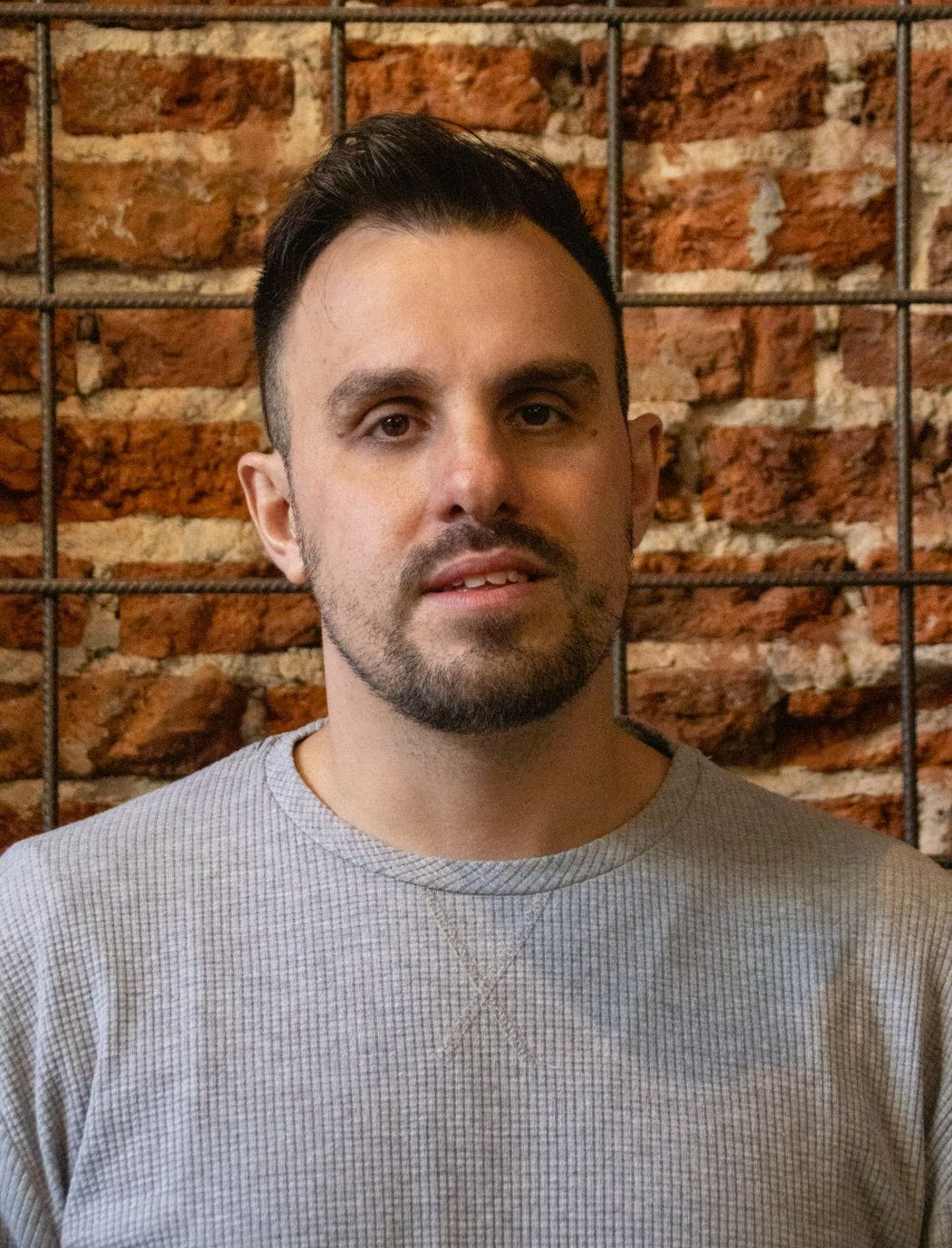
Alan Longo is a performance coach and psychologist by training (UADE, licensed). He has spent more than six years working only with poker players, on the structure and routines that keep their decision-making consistent.
More about Alan →